


One of the first questions any commercial project owner asks is also the hardest to answer honestly: what’s this going to cost? Generic national averages don’t hold up well in a specific local market, and a lot of contractors avoid giving real numbers until a design is finished. Here’s a more useful way to think about commercial construction costs in the Sarasota area.
Why National Cost Averages Don’t Work Locally
Construction costs vary significantly by region, driven by labor availability, material transport costs, and local permitting requirements. A national per-square-foot average might be off by a wide margin in a specific Southwest Florida market compared to a slower-growth region elsewhere in the country. Labor markets alone can shift a number meaningfully: a region with more competition for skilled trades, or a longer commute radius for available crews, carries different labor costs than a market where subcontractors are concentrated close to the jobsite. Add in Southwest Florida’s specific material and freight considerations, and a published national average becomes a starting point at best, not a number to plan a budget around.
What Actually Drives Commercial Construction Costs
Project Type and Complexity
A straightforward retail buildout costs meaningfully less per square foot than a healthcare facility with specialized mechanical and compliance requirements, or an industrial facility with heavy equipment loads.
New Construction vs. Renovation
Renovation work often carries a wider cost range than new construction, since existing conditions aren’t always visible until walls or ceilings are opened. This is one reason experienced contractors build contingency into renovation budgets more conservatively.
Site Conditions
Site work, utility connections, and any environmental factors specific to a property can add cost before a building’s actual structure is even priced.
Finish Level
The difference between a functional, code-compliant finish and a high-end architectural finish can be one of the largest cost variables on a project, independent of square footage.
Why the Same Building Type Can Cost Very Differently to Build
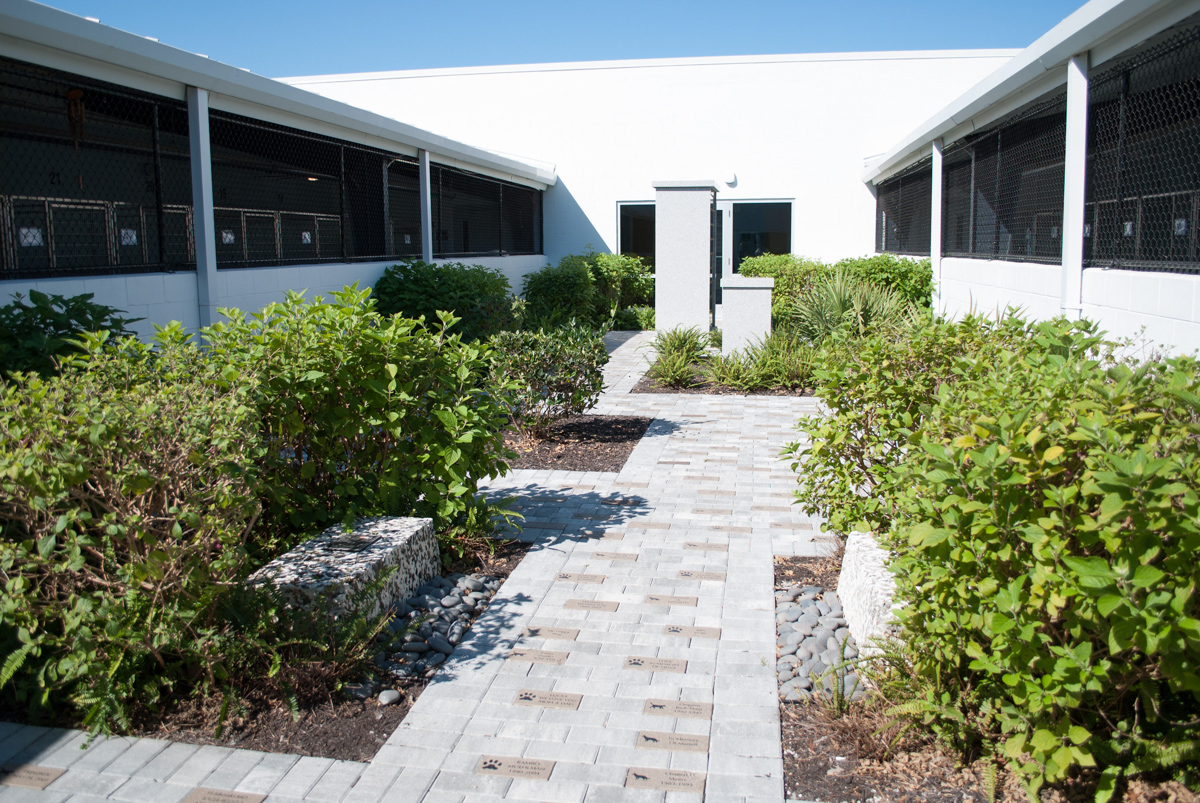 Two projects with the same square footage and the same general use can land in very different cost ranges once site conditions, finish level, and building systems are accounted for. A retail buildout on a flat, previously developed pad with straightforward utility access is a different pricing exercise than the same square footage on a site that needs significant grading, stormwater work, or a longer utility run. Owners comparing a friend’s or colleague’s project cost against their own often run into this gap: the number they heard doesn’t account for the site-specific factors that made that other project cheaper, or more expensive, to build.
A More Useful Approach Than a Per-Square-Foot Number
JE Charlotte’s own approach to early pricing draws on nearly two decades of project cost history in the Sarasota, Manatee, and Charlotte County market, which allows the firm to give an owner a realistic budget range even from a schematic-phase sketch, well before construction documents are finished. That number gets refined at every design milestone, rather than staying fixed from an early guess.
Why Open-Book Pricing Matters When Comparing Costs
When comparing cost estimates between contractors, it’s worth asking how a number was built. An open-book estimate shows an owner exactly what’s included, including labor, materials, subcontractor pricing, and contingency, rather than a single lump figure. That transparency matters most when comparing bids that look similar on the surface but are built very differently underneath.
How Timing Affects What a Project Actually Costs
Cost isn’t only a function of what’s being built, it’s also a function of when. Material pricing and subcontractor availability shift with market conditions, and a budget built six months before construction starts can look different by the time bids actually come in if the estimate wasn’t refreshed along the way. This is part of why a preliminary number built during schematic design gets revisited at every design milestone rather than treated as fixed. An owner who locks in a budget early and doesn’t revisit it risks discovering the gap between that number and current market pricing only once bids are already due.
Getting a Real Number for Your Project
The most reliable way to get an accurate cost range for a specific commercial project in Sarasota is to bring in a construction manager during the design phase, before drawings are finalized. JE Charlotte builds preliminary budgets as soon as schematic drawings exist, refining the number through design development and into a final Guaranteed Maximum Price.
What a Cost Estimate Should Include
A useful early estimate breaks a project into its major cost categories rather than presenting a single lump number: site work and demolition, the building shell, mechanical and electrical systems, interior finishes, and general conditions like supervision and temporary facilities. Seeing a budget broken out this way makes it much easier for an owner to understand where their money is actually going, and where there’s room to adjust scope if the total comes in higher than expected.
How Contingency Fits Into a Cost Estimate
Every realistic construction budget includes contingency, a reserve set aside for conditions that aren’t fully known until construction starts. Renovation projects typically carry more contingency than new construction, since existing conditions behind walls or under floors aren’t always visible on a set of drawings. An owner comparing two estimates should ask not just what the total number is, but how much of it is contingency and what that contingency is meant to cover.
Why Comparing Bids Line by Line Matters More Than Comparing Totals
Two estimates that arrive at similar bottom-line numbers can be built on very different assumptions. One bid might include a healthy contingency and a detailed general conditions line, while another achieves a similar total by trimming contingency to the point where any unforeseen condition becomes an immediate change order. An owner who only compares the final number, without asking what’s actually inside it, has no way to tell these two scenarios apart until construction is already underway and the difference starts to show up in change order requests.
When to Start Asking About Cost
Waiting until construction documents are finished to ask about cost is one of the most common, and most expensive, mistakes an owner can make. By that point, a design has already been drawn to a budget nobody has confirmed is realistic. Asking for a cost range as soon as a schematic sketch exists, even a rough one, gives an owner the chance to adjust scope or finish level while changes are still cheap to make.
A firm willing to give a preliminary number from a rough sketch, rather than insisting on finished drawings first, is generally a good sign. It suggests a level of confidence in their own cost data, built from actual project history rather than a generic formula.
If you’re weighing a commercial project in Sarasota, Manatee, or Charlotte County, the smartest move is asking for that early, open-book number before your design gets much further along.
There’s no single answer to how much commercial construction costs in Sarasota. The honest answer depends on project type, site conditions, and finish level. The most useful thing an owner can do early is get a real, open-book number from a contractor willing to price a project before the design is finished.
Ready for an expert opinion? Get in touch today!
Ready to talk through your commercial project? Reach out and a member of the JE Charlotte team will follow up within one business day. No pressure, no obligation — just a straightforward conversation about your budget and timeline.
Like this article? Spread the word!
Related Posts
6 Common Commercial Permitting Delays in Southwest Florida (and How to Avoid Them)
Learn what general conditions cover on a commercial construction bid and how to compare…
Understanding General Conditions: JE Charlotte’s Guide for Sarasota Commercial Owners
Learn what general conditions cover on a commercial construction bid and how to compare…
What Is Construction Management? CM vs. General Contracting Explained
Construction manager or general contractor? Learn the real difference and what it means…