

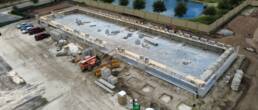
When owners compare commercial construction bids side by side, the conversation often lands on one line item: general conditions. It is frequently the number that separates one contractor’s bid from another, and it is also one of the least understood parts of a commercial proposal. Two bids can carry very different general conditions figures for the same building, and the lower number is not always the better deal. In this guide, we explain what general conditions are, how they differ from overhead and fee, why they vary so much between contractors, and how to compare them fairly when you are reviewing bids for a project in Sarasota, Manatee, or Charlotte County. If you are still building an overall budget, our breakdown of what drives commercial construction costs in Sarasota is a helpful companion to this one.
What General Conditions Cover on a Commercial Construction Project
General conditions are the costs of running the jobsite itself. They are not tied to a single trade like concrete, framing, or electrical. Instead, they cover the people, facilities, and services that keep the entire project organized, safe, and moving from the first day on site through final closeout. A useful rule of thumb: if a cost exists only because this project exists, and it supports every trade rather than one, it usually belongs in general conditions.
While every contractor organizes its bid a little differently, general conditions on a commercial project typically include:
Project supervision. The project manager and superintendent time dedicated to the job, usually priced by the week or month for the length of the schedule.
Temporary facilities. Jobsite trailers, temporary power and water, restrooms, and storage that support crews until permanent systems are in place.
Site protection and safety. Fencing, signage, barricades, and the safety program that keeps workers, owners, and the public protected.
Cleanup and waste removal. Dumpsters, hauling, and ongoing cleaning so the site stays organized and inspection-ready.
Project administration. Document management, scheduling, reporting, and the coordination that keeps the owner and design team informed.
Some contractors also carry items like builder’s risk insurance, permit fees, or testing in general conditions, while others list them separately. That difference alone can make two bids look further apart than they really are. Our preconstruction and estimating process breaks these costs out early so owners can see exactly where each item lives before a final number is set.
General Conditions vs. Overhead and Fee: What Is the Difference?
General conditions are often confused with a contractor’s overhead and fee, but the three represent different things, and knowing the difference makes a bid much easier to read.
General conditions are job-specific. They cover the supervision, facilities, and services needed to run your particular project, and they rise or fall with the size, duration, and complexity of the work. A longer schedule means more weeks of superintendent time and trailer rental. A more complex site means more protection and more coordination.
Overhead is the cost of running the contractor’s business as a whole: office space, accounting, software, executive staff, and other expenses that exist whether or not your project moves forward. Many contractors fold overhead into their fee rather than listing it separately. The fee itself is the contractor’s profit, usually expressed as a percentage of the cost of the work.
Here is why this matters when comparing bids. A contractor can make its general conditions look lean by shifting some job costs into its fee, into subcontractor scopes, or out of the bid entirely. Another contractor might show higher general conditions simply because it is listing every cost transparently. Neither bid is wrong on its face, but only one tells you what you are actually paying for.
Under a construction manager at risk arrangement, these categories are typically defined up front in the contract, which gives an owner a clearer view than a single lump-sum figure. Our article on construction management vs. general contracting explains how that delivery method changes the way costs are presented and tracked throughout a project.
Why General Conditions Vary Between Commercial Contractor Bids
If you have ever received bids where general conditions differ dramatically for the same set of drawings, there is usually a reason behind the gap. A few factors drive most of the difference.
Schedule Length
Because supervision and temporary facilities are priced over time, the schedule a contractor assumes has a direct effect on general conditions. A bid built on an aggressive schedule will show a lower number, but if that schedule is not realistic, those costs tend to return later through extensions or change orders.
Staffing Levels
One contractor may assign a full-time superintendent and a dedicated project manager. Another may split a superintendent across several jobs. The second approach costs less on paper, but it often means less oversight, slower decisions, and more opportunities for problems to go unnoticed.
Occupied Buildings and Phasing
Projects in buildings that stay open during construction require more planning, more protection, and often more time. Temporary partitions, controlled access routes, after-hours work, and phased sequencing all add to general conditions on commercial renovation projects and on build-outs inside active retail centers. A bid that does not account for these conditions is likely underpricing the job.
Southwest Florida Site Conditions
Hurricane season preparation, summer weather delays, and jobsite security in growing markets like North Port and Wellen Park can all influence general conditions in our region. Contractors familiar with the area tend to plan for these realities from the start rather than discovering them mid-project.
What a Low General Conditions Number Can Hide
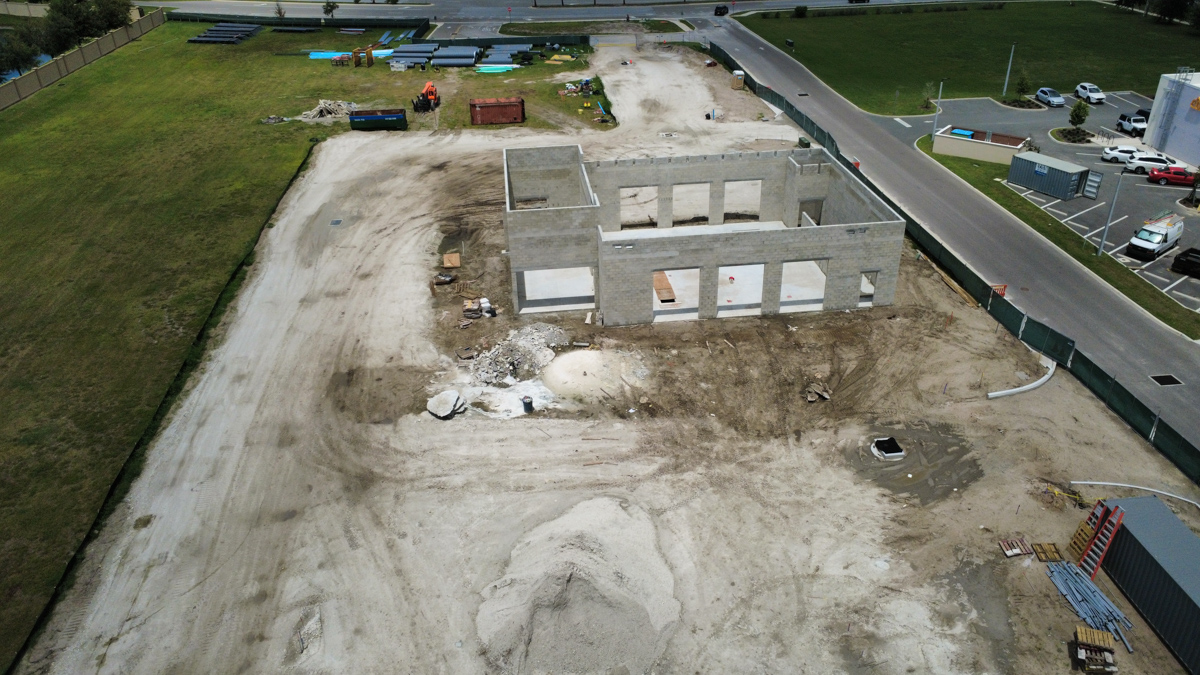 It is natural to gravitate toward the bid with the lowest general conditions. Those costs do not show up as finished walls or new systems, so trimming them feels like pure savings. In practice, an unusually low figure deserves a closer look.
The most common issue is understaffing. When supervision is priced thin, the superintendent may be on site only part of the day or part of the week. Fewer eyes on the work can mean quality issues caught late, subcontractors left to coordinate among themselves, and safety concerns that go unaddressed until they become real problems. On fast-moving tenant improvement work tied to a lease date, that lack of oversight can put an opening at risk.
Another issue is cost shifting. Items that belong in general conditions, such as cleanup, temporary protection, or equipment, can be pushed into subcontractor bids or left out entirely. They do not disappear. They show up later as change orders, often at a point in the project when an owner has little leverage to push back.
Finally, a low number sometimes reflects an unrealistic schedule. If the bid assumes the project will finish weeks earlier than it reasonably can, the gap gets paid for eventually, either in extended general conditions or in rushed work at the end.
None of this means a higher number is automatically better. It means the right question is not which bid has the lowest general conditions, but which bid reflects what it will actually take to run your project well. That philosophy is part of why JE Charlotte Construction has gone 19 years without a single lawsuit. We aim to hit singles, not home runs: price each project to make a fair fee and deliver a satisfied client, not to win on a number we cannot stand behind.
How We Handle General Conditions at JE Charlotte
We approach general conditions the same way we approach every part of a budget: openly, and with the people who will actually run the job doing the pricing.
Open-Book From the First Estimate
Our pricing is open-book, so owners can see every general conditions line item, how it was calculated, and what assumptions sit behind it. If a cost is tied to the schedule, we show the schedule. If it depends on phasing, we show the phasing plan.
Priced by the People Who Manage the Work
There is no separate estimating department at our firm. The project manager who builds your general conditions budget is the same person who will manage the project in the field, so staffing and schedule assumptions reflect how the job will actually run. That continuity is central to our construction management approach.
Tracked and Reported Throughout Construction
Once construction begins, general conditions are tracked alongside the rest of the budget in Procore, where owners and the design team can see current information in real time. Weekly coordination meetings and a monthly status report keep cost and schedule visible, so there are no surprises at closeout.
Part of a Larger Process
General conditions planning starts during preconstruction and carries through every phase of our 13-step project framework, from team integration through warranty management. It is one piece of a larger system designed to keep budgets honest from start to finish.
Checklist: Comparing General Conditions on Sarasota Commercial Bids
Before you choose a contractor based on general conditions, use this checklist to make sure you are comparing bids on equal terms:
Confirm what is included. Ask each contractor for an itemized list and note where items like insurance, permit fees, and testing are carried.
Check the schedule behind the number. Make sure each bid is based on a realistic project duration.
Ask about staffing. Find out whether the superintendent and project manager are dedicated to your project or shared across several jobs.
Look for shifted costs. Compare subcontractor scopes to see whether jobsite costs have been moved out of general conditions.
Consider site conditions. Occupied buildings, phasing, and weather planning should be reflected in the price.
Ask how costs will be reported. Open-book tracking during construction matters as much as the original bid.
From our Venice office, we help owners across Sarasota, Manatee, and Charlotte counties work through these questions before a contract is signed.
Talk Through Your Project’s General Conditions With Our Team
Whether you are reviewing competing bids now or planning a project that is still in early design, we are happy to walk through general conditions with you line by line. We can explain what a realistic number looks like for your project type, flag costs that may be missing from a bid, and show you how our open-book approach keeps every dollar visible from the first estimate through closeout. There is no pressure and no obligation attached to that first conversation. If you are planning a commercial project in Sarasota, Manatee, or Charlotte County, contact us today and a member of our team will follow up within one business day.
Ready for an expert opinion? Get in touch today!
Ready to talk through your commercial project? Reach out and a member of the JE Charlotte team will follow up within one business day. No pressure, no obligation — just a straightforward conversation about your budget and timeline.
Like this article? Spread the word!
Related Posts
6 Common Commercial Permitting Delays in Southwest Florida (and How to Avoid Them)
Learn what general conditions cover on a commercial construction bid and how to compare…
What Is Construction Management? CM vs. General Contracting Explained
Construction manager or general contractor? Learn the real difference and what it means…
How Much Does Commercial Construction Cost in Sarasota?
A realistic look at what drives commercial construction costs in Sarasota, FL, and why…